

%201.svg "cancel (1) 1")

.png?width=46&height=35&name=Group%20(2).png)



In an exclusive Q&A with Energy Insights, Mike Cannon-Brookes’ private investment firm and family office says Australia is an incredibly attractive market for thermal energy storage, but stronger incentives are needed.
Grok Ventures has described thermal storage as an “asymmetric, underinvested opportunity”. What did you see in Antora’s tech and economics that convinced you the sector was ready to move from promising technology to investable infrastructure at this scale?
It’s less about the sector being ready and more about the technology maturing to a point where we can be confident in its performance at commercial scale. As a starting point, Antora has compelling techno-economics, which is what drove our initial investment in the company. At the core of this is the use of an ultra-low-cost storage medium (carbon/synthetic graphite), which has high energy density and little to no degradation over time. This low-cost storage medium is paired with an efficient conversion architecture that enables 100 hours of storage, resulting in a battery with four times the energy density of lithium ion and a very low installed cost per unit of storage.
What gave us confidence in the technology’s readiness was the data from Antora’s pilot and product testing. Not only did the product meet initial technical targets, but Antora was already rapidly iterating to drive improvements in cost and performance. It was clear that Antora was effective at metabolising learnings and leveraging the modular nature of the technology to ride a steep learning curve and drive costs down.
Grok Ventures was not simply an investor in Antora, but the project equity investor in its first giga-scale deployment. What gave you the confidence to take project-level risk on a first-of-a-kind project, and what does that tell us about the growing bankability of thermal energy storage (TES)?
Our confidence came from three places.
-
The depth of our relationship with Antora: We'd worked closely with the team since our Series A investment and Antora effectively designed the project with our bankability needs in mind from the outset. As roadblocks emerged, or new opportunities entered the pipeline, we were able to help steer the company towards the most bankable solutions. Through this process we built a high-trust, high-transparency relationship, and gained ongoing confidence in Antora’s ability to execute a project of this scale through firsthand experience of the team’s capability and proven problem solving strength.
-
Confidence the technology works: Antora's technology is modular, so scaling to gigawatt size was fundamentally an engineering replication exercise. We already had confidence in the performance of a single battery unit, validated through the pilot, and we worked with third-party engineers to validate performance at the system level. Given the project’s first-of-a-kind nature, it also included redundant pathways for steam production to ensure customer delivery.
-
Supportive policy backdrop: The breadth of US incentives for clean energy and manufacturing, at both the state and federal level, provides a helpful adoption tailwind and works to increase bankability and investor confidence in innovative projects of this nature.
Project Big Stone is now delivering energy while commissioning. What are the most important things you will be watching as the project operates — technically, commercially or operationally — to determine whether the investment thesis has been proven?
It is inevitable that a project of this nature, building for the first time at commercial scale, will create both unforeseen issues and opportunities.
Technically, we're tracking whether the project is hitting its performance specifications. As more battery trains are installed, we expect the learnings from earlier train installations to be carried through and applied towards final completion.
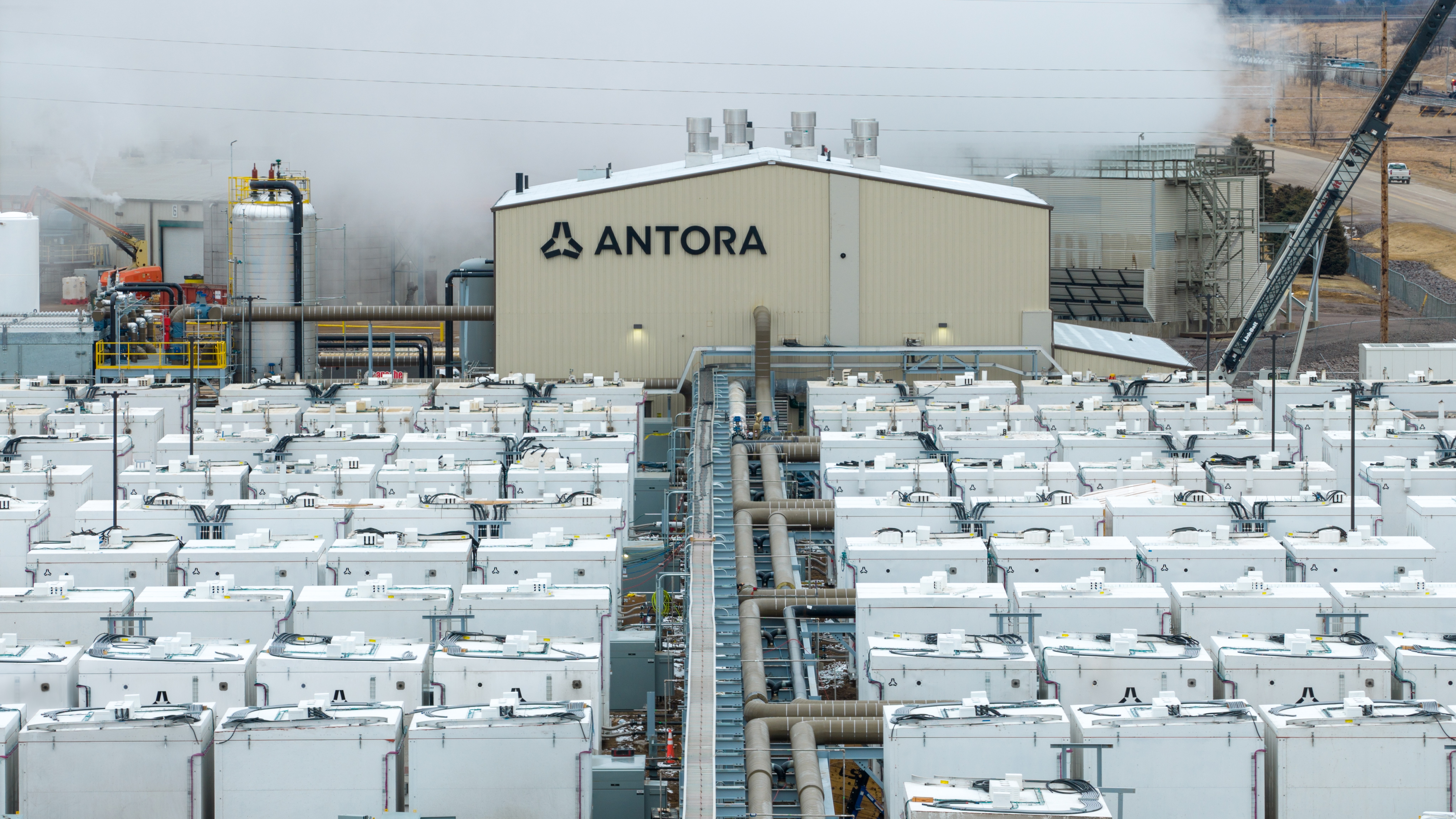
Commercially, we're focused on two things: whether the project has been delivered within budget and on schedule and whether it's generating the cash flows within the bounds of our original modelling.
Operationally we are making decisions with Antora to ensure we are maximising project success. What’s important here is how quickly operational learnings are metabolised to improve outcomes at steady-state. For projects of this pioneering nature, the starting expectation should be that things won’t exactly go to plan, but the team should have the experience to address issues as they arise, which is what we have experienced to date with Antora.
Where do you see thermal batteries having the strongest competitive advantage over other forms of storage? Is the biggest opportunity industrial process heat, data centres, electricity supply — or applications we are not yet paying enough attention to?
We see advantages across all three applications, and the reason is the same in each: thermal storage is more competitive wherever the output is heat, and it can beat lithium in power applications as the duration requirement lengthens.
Industrial process heat is where the edge over lithium or other storage mediums is clearest today. These processes run 24/7 and need heat, not electrons. Delivering heat from a thermal battery directly to an industrial process bypasses the need to convert stored electricity back into thermal energy, achieving greater efficiencies. Because TES' cost sits in cheap storage media rather than cells, adding hours of duration is inexpensive.
At scale, we believe long-duration TES paired with renewables can compete with lithium on levelised cost of electricity for baseload power, whether for data centres or otherwise. In the nearer term, we're starting to see data centres push for a "bring your own capacity" approach, whereby large loads help fund or bring their own capacity to the grid in exchange for accredited capacity credits, rather than waiting out the multi-year utility resource planning cycle.
Within that model, duration matters a great deal for how much capacity a storage asset is actually credited with, and we expect thermal batteries to hold an advantage over short- and medium-term alternatives.
Australia has abundant renewable resources alongside energy-intensive industries such as minerals processing and manufacturing. What would need to be true — commercially, technically or in the policy environment — for projects like Big Stone to become investable at scale in Australia, and is that an opportunity Grok is actively considering?
Australia is, at a fundamental level, an incredibly attractive market for TES. We have a high reference gas price, an abundance of renewable energy, and an energy-intensive industrial base that's exactly suited to this technology. The underlying economics are on the precipice of unlocking capital at scale and we’re actively considering opportunities in Australia.
However, two things need to be true for that promise to translate into scaled, investable projects in the next few years.
The first is confidence that the domestic gas reservation policy is a near-term relief strategy, and not an enduring policy position. We need a gas forward curve that reflects the structural depletion of gas supply and rising costs to create an opportunity for TES projects targeting a commercial operation date post-2027.
The second is stronger incentives or subsidy programs that work to bolster project cash flows and help investors and customers bridge the gap to their hurdle rate of return on projects, as we’ve seen in the US under the IRA and other state-based carbon incentive programs. The specific mechanism matters less than the principle - this could take the form of funds-matched grants (like ARENA’s ARP scheme) that subsidises capex, directing existing funding architecture (such as the NRF) toward de-risking thermal storage projects to lower the blended cost of capital, or establishing clear incentive programs that reward industry for adopting low carbon practices to increase the competitiveness of TES. What matters is that policy actively tilts the economics in thermal storage's favour while the technology scales.
About Ridhaa Ahmed, Head of Investments, Grok Ventures
 Ridhaa leads origination, portfolio management and governance across a mandate spanning growth equity, infrastructure, private credit and venture, with a particular focus on the energy transition and industrial decarbonisation. Ridhaa trained and worked as a nuclear design and commissioning engineer before pursuing a career in investing and has spent the past 16 years working across infrastructure, private equity and mezzanine asset classes.
At Grok, Ridhaa holds active board positions across the portfolio and works directly with his team to deploy capital into the opportunities shaping the next phase of the global energy system
Founded by noted business magnate and philanthropist, Mike Cannon-Brookes Grok Ventures is an Australia based fund investing globally in technology enabled climate companies and infrastructure.


.png)

Creating clarity during the energy transition.
Get a different perspective on energy with our monthly newsletter.
